Introduction
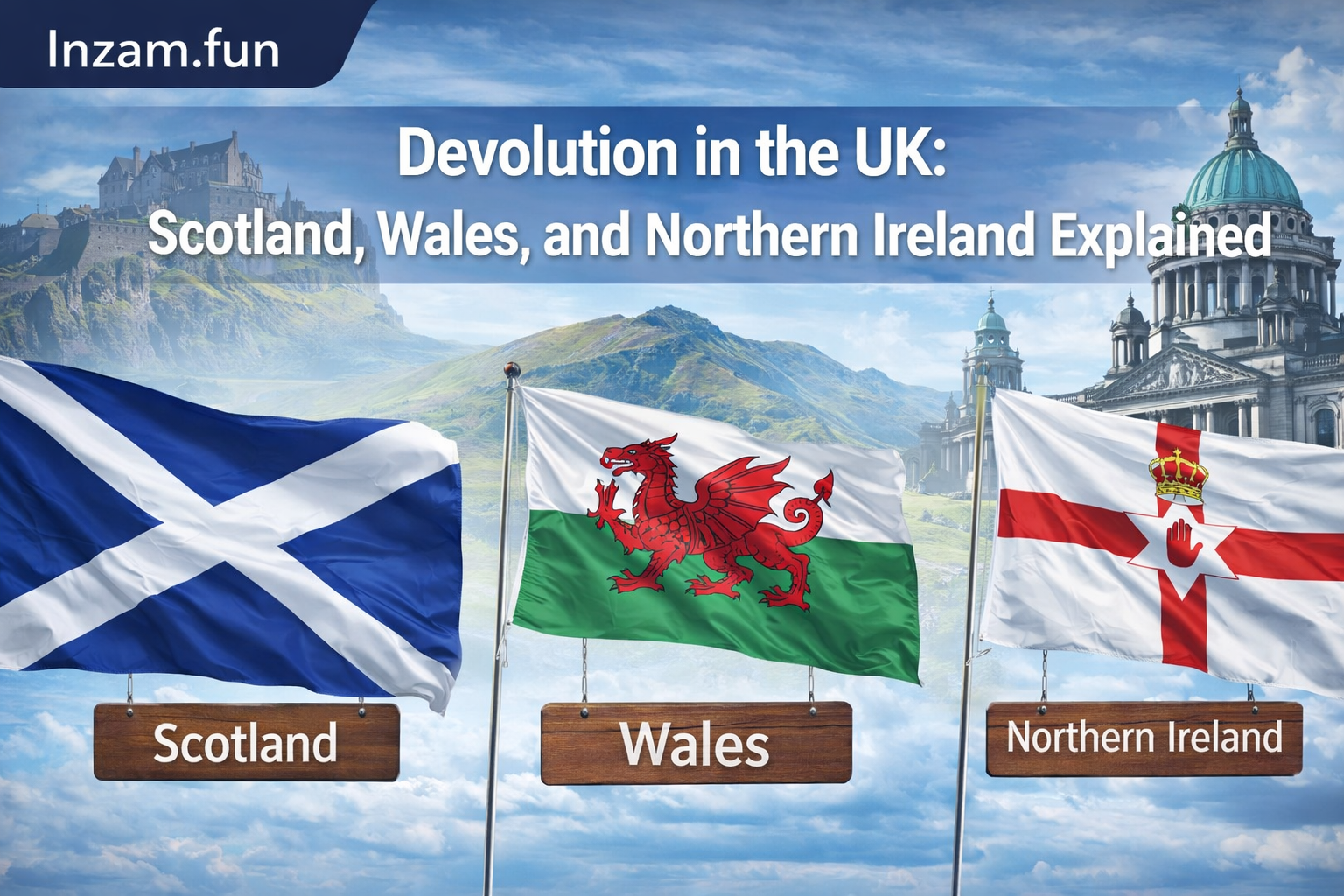
The United Kingdom is made up of four nations: England, Scotland, Wales, and Northern Ireland. Although the UK government in London is responsible for national policies, some powers have been transferred to regional governments in certain parts of the country.
This process is known as devolution. Devolution allows Scotland, Wales, and Northern Ireland to have their own legislative bodies that can make decisions on specific regional matters.
The goal of devolution is to give these regions more control over policies that directly affect their communities while still remaining part of the United Kingdom.
Understanding how devolution works helps explain the structure of governance across the UK and how power is shared between national and regional institutions.
What Is Devolution?
Devolution refers to the transfer of certain political powers from the central UK government to regional governments.
This means that while the UK Parliament in London remains the supreme legislative authority, some decisions are handled by regional parliaments or assemblies.
These regional bodies can create laws and manage policies in areas such as:
- Education
- Healthcare
- Transportation
- Agriculture
- Local economic development
However, important national matters such as defense, immigration, and foreign policy remain under the control of the UK government.
Devolution in Scotland
Scotland has one of the most powerful devolved governments within the United Kingdom.
The Scottish Parliament, located in Edinburgh, was established in 1999 following a public referendum that supported greater regional autonomy.
The Scottish Parliament has the authority to make laws on a wide range of domestic issues, including:
- Education policies
- Health services
- Housing regulations
- Environmental policies
- Justice and policing
The Scottish Government is led by the First Minister, who acts as the head of the regional administration.
Although Scotland has its own parliament and government, it remains part of the United Kingdom and participates in the UK Parliament in London.
Devolution in Wales
Wales also has a devolved government known as the Senedd (Welsh Parliament).
The Senedd was created to allow Welsh representatives to make decisions about policies that affect Wales directly.
Over time, the powers of the Senedd have gradually expanded.
Today, the Welsh Parliament has authority over several important areas, including:
- Public health
- Education
- Transportation
- Local government
- Culture and language policies
The Welsh Government, led by the First Minister of Wales, is responsible for implementing policies and managing public services within the region.
Devolution in Northern Ireland
Northern Ireland has its own devolved legislative body known as the Northern Ireland Assembly, located in Belfast.
The Assembly was established as part of the Good Friday Agreement (1998), which helped bring political stability to the region after many years of conflict.
The Northern Ireland Assembly has authority over a range of regional matters, including:
- Health services
- Education
- Agriculture
- Economic development
- Infrastructure
The government in Northern Ireland operates under a power-sharing system, where different political groups work together to govern the region.
This arrangement is designed to ensure cooperation between communities with different political and cultural backgrounds.
England and the Absence of Devolution
Unlike Scotland, Wales, and Northern Ireland, England does not have its own separate national parliament.
Instead, England is governed directly by the UK Parliament in London.
However, there have been some developments in regional governance within England, including the creation of local mayoral authorities and regional councils.
These local authorities manage certain services such as transportation, housing, and economic development in specific areas.
Reserved and Devolved Powers
In the UK system, powers are divided into two main categories:
Devolved Powers
Devolved powers are responsibilities handled by regional governments.
These typically include policies related to everyday services such as education, healthcare, housing, and transportation.
Regional governments can create laws and policies tailored to the specific needs of their populations.
Reserved Powers
Reserved powers remain under the authority of the UK Parliament and government.
These include national matters such as:
- Defense
- Immigration
- International relations
- National security
- Currency and economic policy
This division of responsibilities allows regional governments to manage local issues while the central government handles national and international matters.
Why Devolution Was Introduced
Devolution was introduced to give regions greater control over policies that directly affect their communities.
Supporters of devolution believe that regional governments better understand local needs and can design policies that reflect the priorities of their populations.
Devolution also helps strengthen democratic participation by bringing political decision-making closer to the people.
By allowing regional governments to manage certain responsibilities, the UK political system can become more responsive to local concerns.
The Impact of Devolution
Since its introduction, devolution has significantly shaped governance in the United Kingdom.
Regional governments now play an important role in managing public services and developing policies that address regional priorities.
At the same time, the UK Parliament continues to oversee national issues and maintain the unity of the country.
This balance allows different regions to exercise a degree of self-governance while remaining part of the broader United Kingdom.
Conclusion
Devolution has transformed the political structure of the United Kingdom by distributing certain powers to regional governments in Scotland, Wales, and Northern Ireland.
These devolved institutions allow regions to manage important public services and create policies suited to their specific needs.
While the UK Parliament remains the ultimate authority, devolution has created a more flexible system of governance that recognizes the diversity of the country’s different nations.
Understanding devolution helps provide a clearer picture of how political power is shared across the United Kingdom and how regional voices influence national decision-making.