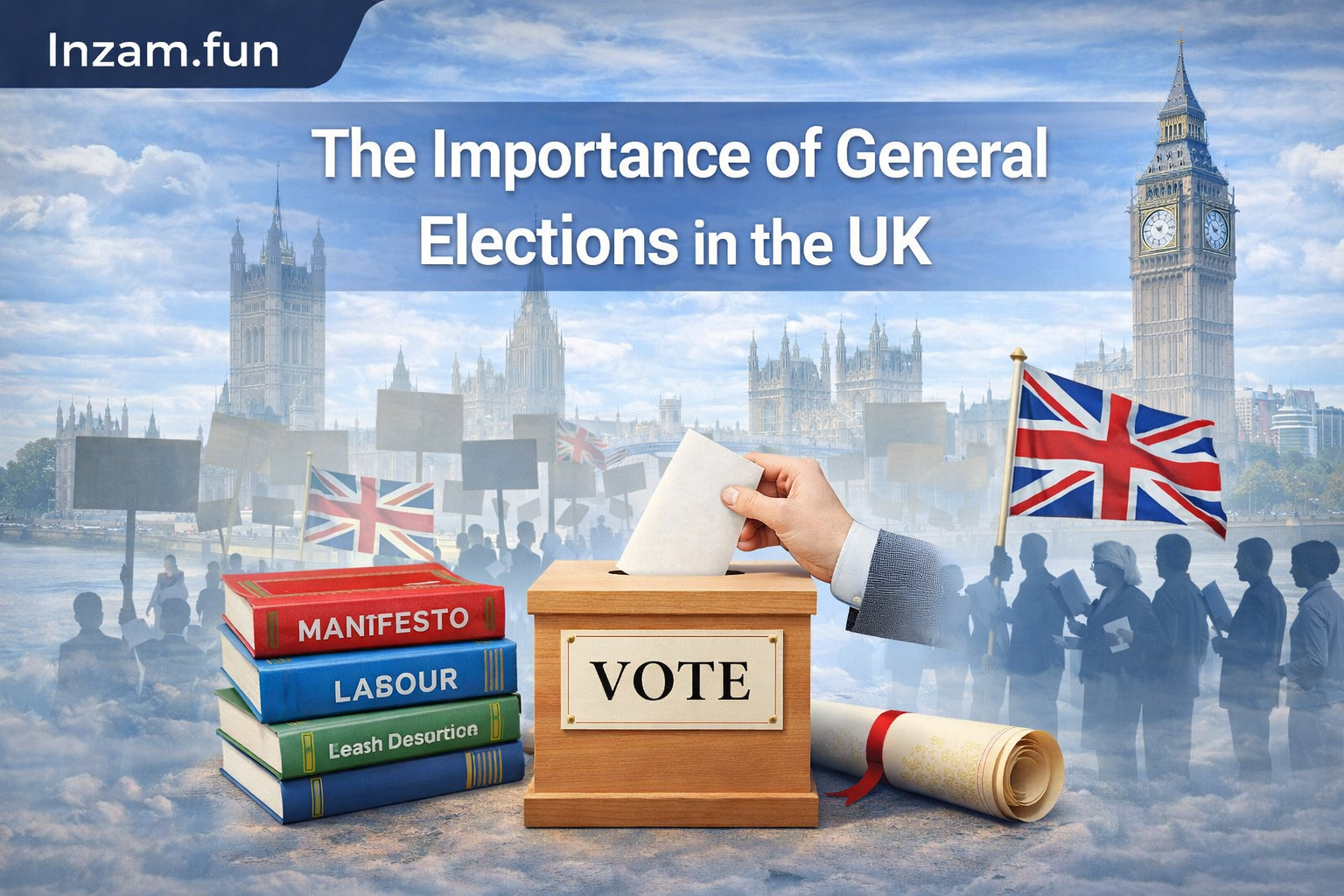
Introduction
General elections are one of the most important features of democracy in the United Kingdom. They provide citizens with the opportunity to choose the representatives who will make decisions on their behalf in Parliament.
Through elections, voters can influence the direction of national policies, hold political leaders accountable, and decide which political party should form the government.
The general election process ensures that political power remains connected to the will of the people. By participating in elections, citizens play an active role in shaping the future of the country.
What Is a General Election?
A general election is a nationwide voting process where citizens elect Members of Parliament (MPs) to represent them in the House of Commons.
Each MP represents a specific geographic area known as a constituency. The United Kingdom is divided into 650 constituencies, and each one elects a single MP.
During the election, voters in each constituency choose the candidate they believe will best represent their interests in Parliament.
The candidate who receives the most votes in that constituency wins the seat.
How Often General Elections Are Held
General elections in the United Kingdom are usually held every five years.
However, elections can sometimes occur earlier under certain political circumstances, such as when the government loses the support of Parliament or when a new election is called.
Regular elections ensure that political leaders remain accountable to voters and that governments must seek public approval to continue governing.
The First Past the Post Voting System
The United Kingdom uses a voting method known as First Past the Post.
Under this system, the candidate who receives the highest number of votes in a constituency wins the election, even if they do not receive more than half of the total votes.
This system is relatively simple and allows election results to be calculated quickly.
However, it can also lead to situations where a political party wins a majority of seats in Parliament without receiving the majority of votes nationwide.
Despite this, the system has been used in UK elections for many decades.
Election Campaigns
Before a general election takes place, political parties and candidates run campaigns to present their ideas to voters.
Campaigns may include:
- Public speeches and debates
- Policy announcements
- Community meetings
- Media interviews
- Online communication
During the campaign period, political parties publish documents called manifestos. These documents outline the policies and plans that the party intends to implement if it wins the election.
Manifestos help voters understand what each party stands for and what changes they propose.
Forming the Government
After all votes are counted, the number of seats won by each political party in the House of Commons is determined.
The political party that wins the majority of seats usually forms the government. The leader of that party becomes the Prime Minister.
If no party wins an overall majority, political parties may negotiate to form a coalition government or operate as a minority government.
In such cases, cooperation between parties becomes necessary to pass legislation and manage national policies.
The Role of Voters
General elections give citizens a direct voice in the political process.
By voting, individuals can express their preferences about issues such as economic policies, healthcare, education, national security, and environmental protection.
Voting also allows citizens to support leaders and parties whose ideas reflect their values and priorities.
Participation in elections is considered one of the most important responsibilities of citizenship in a democratic society.
Ensuring Accountability
Another important function of general elections is to hold governments accountable.
If voters are dissatisfied with the performance of the current government, they have the opportunity to elect different representatives and support a new political direction.
This process encourages political leaders to remain responsive to public concerns and to govern responsibly.
Regular elections ensure that power cannot remain permanently in the hands of a single group without public approval.
Encouraging Political Participation
General elections also encourage broader political engagement within society.
Election periods often stimulate public discussion about national issues, policy proposals, and the future direction of the country.
Citizens may attend political events, follow debates, and engage in conversations about government policies.
This participation strengthens democratic culture by encouraging people to stay informed and involved in public affairs.
Why General Elections Matter
General elections are essential because they maintain the connection between the government and the people.
They ensure that political leaders must regularly seek the approval of voters and provide an opportunity for new ideas and leadership to emerge.
Through elections, citizens can influence the laws, policies, and decisions that shape the nation’s future.
This process helps preserve democratic principles such as representation, accountability, and public participation.
Conclusion
General elections are a cornerstone of the United Kingdom’s democratic system. By allowing citizens to choose their representatives in Parliament, elections ensure that political authority reflects the will of the people.
Through campaigning, voting, and public debate, elections create opportunities for citizens to participate directly in the governance of their country.
The importance of general elections lies not only in selecting leaders but also in strengthening democracy, encouraging accountability, and shaping the future direction of the United Kingdom.