Introduction
The United Kingdom has one of the oldest parliamentary systems in the world. At the center of this system is the UK Parliament, the institution responsible for making laws, debating national issues, and holding the government accountable.
Parliament plays a crucial role in maintaining democracy in the United Kingdom. It provides a platform where elected representatives and experienced public figures can discuss policies, examine legislation, and ensure that the government acts in the best interest of the public.
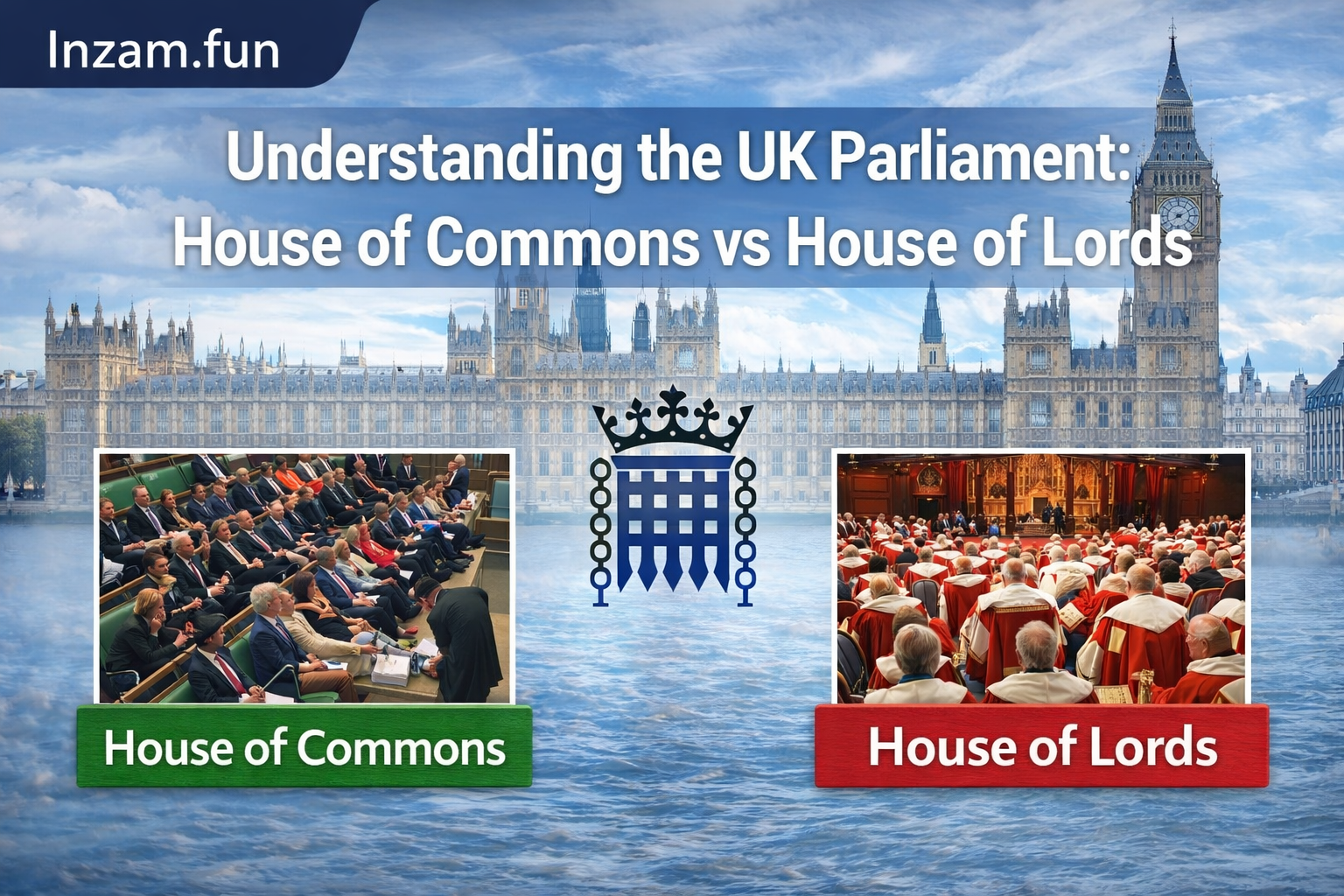
The UK Parliament is made up of two chambers: the House of Commons and the House of Lords. Although both chambers work together in the law-making process, they have different responsibilities, structures, and levels of power.
Understanding the differences between these two institutions helps explain how laws are carefully examined before they become part of the country’s legal system.
What Is the UK Parliament?
Parliament is the central law-making body in the United Kingdom. It is responsible for:
- Debating national issues
- Passing new laws
- Reviewing government decisions
- Representing the interests of citizens
Parliament is made up of three parts:
- The Monarch
- The House of Commons
- The House of Lords
For a law to be officially approved, it must pass through both chambers of Parliament and receive formal approval from the monarch.
The House of Commons
The House of Commons is the most powerful and influential chamber of Parliament. It is made up of Members of Parliament (MPs) who are elected by the public during general elections.
Currently, there are 650 MPs, each representing a specific geographic area known as a constituency.
Role of Members of Parliament
Members of Parliament have several important responsibilities, including:
- Representing the interests of their constituents
- Debating national policies
- Proposing and voting on legislation
- Holding the government accountable
MPs often communicate with the people in their constituencies to understand local concerns and bring those issues into parliamentary discussions.
Government Formation in the Commons
The House of Commons is also where the government is formed.
After a general election, the political party that wins the majority of seats in the House of Commons usually forms the government. The leader of that party becomes the Prime Minister.
Because of this, most major political debates and decisions take place within the House of Commons.
The House of Lords
The House of Lords is the second chamber of the UK Parliament. Unlike the House of Commons, members of the House of Lords are not elected by the public.
Instead, members are appointed because of their experience, achievements, or contributions to public life.
The House of Lords includes several types of members:
- Life Peers – appointed for their lifetime because of expertise or public service
- Bishops – senior leaders from the Church of England
- Hereditary Peers – a small number of members who inherited their titles
Although the House of Lords does not have the same political power as the House of Commons, it plays an important role in reviewing legislation.
Reviewing and Improving Laws
One of the main responsibilities of the House of Lords is to carefully review proposed laws that have already been approved by the House of Commons.
Members examine bills in detail, often suggesting amendments to improve clarity, fairness, or effectiveness.
Because many members of the House of Lords have extensive professional experience in areas such as law, science, medicine, or public service, their insights can help improve legislation before it becomes law.
This process helps ensure that laws are carefully examined from different perspectives.
Key Differences Between the Two Chambers
Although both chambers work together, there are several important differences between the House of Commons and the House of Lords.
Election vs Appointment
The most obvious difference is how members enter each chamber.
Members of the House of Commons are elected by the public, which gives them a direct democratic mandate.
Members of the House of Lords are appointed rather than elected, allowing experts from various fields to contribute to legislative discussions.
Political Power
The House of Commons has greater political authority. It controls government formation and has the final say on most legislation.
If there is a disagreement between the two chambers, the House of Commons can ultimately override the House of Lords in certain situations.
This ensures that elected representatives remain the primary decision-makers.
Legislative Role
Both chambers participate in the law-making process, but they approach legislation differently.
The House of Commons focuses on political debate, government policies, and voting on major decisions.
The House of Lords often concentrates on detailed examination and technical improvements to legislation.
Together, these roles help create a balanced system where laws are both democratically approved and carefully reviewed.
Why the Two-Chamber System Exists
The UK Parliament uses a bicameral system, meaning it has two chambers instead of one.
This structure helps prevent rushed decisions and encourages careful examination of laws.
The House of Commons reflects the democratic voice of the public, while the House of Lords provides additional expertise and scrutiny.
By combining these perspectives, Parliament can produce more balanced and effective legislation.
The Importance of Parliamentary Debate
Debate is one of the most important features of Parliament.
Members from different political parties present arguments, challenge proposals, and discuss the possible impact of policies.
These debates allow ideas to be tested and refined before decisions are made.
They also ensure that government actions are publicly examined and that political leaders remain accountable to elected representatives.
Conclusion
The House of Commons and the House of Lords together form the heart of the United Kingdom’s parliamentary system.
While the House of Commons represents the democratic voice of the public and holds the primary political authority, the House of Lords provides expertise and careful review of legislation.
By working together, these two chambers help ensure that laws are thoroughly debated, examined, and improved before they are implemented.
Understanding the roles of both institutions offers valuable insight into how the UK’s political system functions and why Parliament remains such an important part of British democracy.